piyush kaviraj

feelings and musings…


Leave a comment

A Slow Rise Might Be a Blessing for Jan Suraj (or any new party that sincerely wants to work for Bihar)— and for Bihar


Even if Prashant Kishor’s party gets just a few seats, it could still reshape Bihar’s politics. Sometimes losing an election is the best way to win public trust.

By Piyush Kaviraj

Bihar stands at a political crossroads. The old guard is weary, the youth restless, and public faith in governance brittle. In this climate, Prashant Kishor’s Jan Suraj captured attention with its promise of reform. But a slower political rise — not an overnight victory — might actually serve both the movement and Bihar better.


What if losing becomes winning for Bihar?

Keeping exit polls data aside, if Jan Suraj wins outright, it will be a big success for Prashant Kishor. But if the party comes second or even third, securing just a few seats, too could be a quiet victory .

Sometimes, losing an election allows a movement to build credibility, discipline, and experience — all of which are essential for lasting reform in a politically layered state like Bihar.


Bihar’s long wait for steady governance

For decades, Bihar’s story has been one of unrealized potential. It has a young population, a deep talent pool, and an enduring migration crisis. People want change, but are cautious after years of political churn.

Jan Suraj has tapped into that sentiment, but trust must be earned slowly. Bihar doesn’t need another quick wave — it needs consistent, grounded leadership that grows into the role rather than rushes toward it.


Inexperience and the temptation of power

Even if Jan Suraj’s MLAs are honest and well-intentioned, they will be new to the machinery of governance. Bihar’s bureaucracy is dense, political alliances are fragile, and the system often resists reform.

Fresh legislators can easily be trapped, framed, or swayed. Even before the polling, some of their candidates were seen changing sides, or withdrew from contest. Worse, the sudden thrill of power can test their integrity. A few years in opposition would allow them to learn governance without the burden of ruling, and to understand how policy, budgets, and politics really work.


The cautionary tale of AAP

The Aam Aadmi Party once embodied similar hopes of clean politics and people-first governance. But swift success brought turbulence — internal rifts, corruption allegations, and several leaders behind bars.

Jan Suraj may not face the same fate, but the lesson stands: rapid power without institutional depth can destroy reformist credibility. Building political and administrative maturity slowly could help Jan Suraj avoid that trap.


Opposition as a training ground

Even from the opposition benches, Jan Suraj could play a decisive role. They can act as policy watchdogs, question inefficiencies, and keep governance discussions alive.

At the grassroots, their volunteers can work on local development, engage with communities, and demonstrate small-scale impact. This period can also help them understand what resonates with Biharis, refine their message, and build loyalty beyond slogans.


Where Tejashwi has an edge

Unlike Kishor’s team, Tejashwi Yadav already has administrative experience. His tenure as Deputy Chief Minister gave him some exposure to governance, and his focus on job creation has earned him a measure of credibility among Bihar’s youth.

Jan Suraj, meanwhile, could use this time to gain practical experience on the ground — managing local issues, experimenting with solutions, and proving their seriousness before seeking full control of the state.


The Prashant Kishor paradox

Kishor’s technocratic image is both an asset and a liability. His experience with multiple national parties gives him unmatched strategic insight, but also makes many Biharis skeptical of his loyalty to one cause.

Jan Suraj’s cadre — composed of teachers, students, and local workers — represents something more grassroots and idealistic. Bridging that gap between Kishor’s policy expertise and the cadre’s local sincerity will decide whether Jan Suraj becomes a genuine people’s movement or just a political consultancy with a new logo.


Lessons from Bihar’s own history

Bihar’s political evolution has often followed this arc. From Jayaprakash Narayan’s movement to Nitish Kumar’s early years in opposition, history shows that political maturity is usually forged outside power. Movements that grow slowly tend to survive longer and lead more responsibly.


Hoping for sincerity — and second chances

This is not about endorsing or dismissing any party. Bihar needs leaders who listen before they rule, who put competence above symbolism.

Against cautious wisdom, I want to believe that both Prashant Kishor (or Pushpam Priya or any other sincere youth leader) genuinely wish to work for Bihar’s development. If so, they deserve a chance — for PK, one to prove that a strategist can become a leader, and the other that experience can evolve into meaningful reform.

If Jan Suraj spends the next few years listening, learning, and delivering on the ground, its real victory might not come in 2025 but may be in 2030 or later. And perhaps that kind of victory — slow, earned, and deeply rooted — is the one Bihar waits for all along.

Leave a comment

वर्तमान समय और लोकनायक जे.पी. की प्रासंगिकता


वर्तमान समय में जेपी की प्रासंगिकता

45 वर्ष हुए जब सही मायने में एक सम्पूर्ण क्रांति का आह्वान हुआ जिससे सम्पूर्ण राष्ट्र, विशेषरूप से बिहार, के राजनीति का अद्भुत मंथन हुआ। बलवान चरित्र और गाँधीवादी शस्त्रों में निपुण लोकनायक जय प्रकाश नारायण जी ने जब बिहार में सुगबुगा रहे छात्र राजनीति को अपना प्रखर नेतृत्व दिया तो यह सुगबुगाहट सम्पूर्ण राष्ट्र में क्रांति का मशाल ले कर फैली और दिल्ली में स्थापित सरकार, जिसने जनतंत्र को विस्थापित करने में कोई कसर नहीं छोड़ी थी, को जड़ से हिल दिया। जेपी के लोकनेतृत्व के लहर में देश फिर से 1942 के जन-आंदोलन जैसा महसूस करने लगा था और उनके कहने पर छात्रों ने कालेज और युवाओं ने अपने नौकरी छोड़ दिए थे।

इस लोक-मंथन ने खास तौर पर बिहार राज्य में कई समाजवादी और जनवादी नेताओं को जन्म दिया और संवारा। हालांकि बहुत नेता परदे के पीछे काम करते रहे और बाद में गुमनामी में रहे किन्तु पिछले 50 वर्षों के राजनैतिक मैदान में जो योद्धा दिखे और ऊपर उठे वो जेपी आंदोलन के ही उपज हैं, चाहे वो पिछले 30 वर्षों से सत्ता संभाले लालू और नीतीश हों,  या सुशील मोदी, राम विलास पासवान, रवि शंकर प्रसाद, या राम जतन सिंहा।

आज ये सभी बड़े नाम-धारी समय के रथ पर सवार होकर काफी दूर आ चुके हैं। सभी रिटायर होने के करीब हैं या होने लगे हैं। पासवान जी अभी कुछ दिन पहले ही दिवंगत हो गए। ऊपर से इन नेताओं ने दो महत्वपूर्ण गलतियाँ की। पहला की ये नेता जेपी के सिद्धांतों से समय के साथ दूर होते चले गए, और कइयों ने अपने परिवार को ही आगे बढ़ाना शुरू कर दिया। बाकी समय तो ये धुरंधर नेता एक दूसरे के ही पर कुतरने में लगे रहते हैं। कभी स्वर्गीय पासवान जी की जिद ने सरकार बनने में बाधा डाल दिया, तो नीतीश जी सरकार बचाने के लिए भाजपा, राजद और काँग्रेस सब को आजमाते रहे हैं। लालू जी खुद जेल में हैं, लेकिन अपने परिवार को ही सत्ता का केंद्र बनाए रखने के लिए कभी पत्नी, कभी सालों और अब पुत्रों को आगे कर रहे हैं। सुशील मोदी जी नीतीश जी के छत्र छाया से बाहर ही नहीं आना चाहते हैं। भाजपा में और कोई नेता तो इतना बड़ा नहीं दिखता। शाहनवाज़ हुसैन और राजीव प्रताप रुडी राष्ट्रीय स्तर पर थोड़ा नाम रखते थे पर इनकी उम्र भी किसी से छिपी नहीं है। काँग्रेस में तो कोई दमदार नाम तक नहीं, आंतरिक कलह और घमासान से ही किसी को फुरसत नहीं वहाँ। जेपी ने तो देश के सर्वोच्च पदों को भी विनम्रता से ठुकरा दिया था और यहाँ हर छोटे पद के लिए  लोग क्या से क्या कर रहे हैं।

दूसरा और महत्वपूर्ण कि इन लोगों ने भविष्य के लिए प्रभावी नेता तैयार नहीं किए। इसलिए अब स्थिति यह है कि बिहार जैसे राज्य में कोई शक्तिशाली युवा चेहरा ही नहीं है। बिहार के कॉलेजों के छात्र नेताओं को ना तो कोई जानता है, ना ही कॉलेजों में ही उनका कोई वजूद नजर आता है। जो इक्के-दुक्के नाम सुनने को मिलते हैं वो इन नेताओं के परिवार से हैं। ले दे कर चिराग पासवान, तेजस्वी और तेज प्रताप के नाम मालूम हैं लोगों को। कन्हैया कुमार का नाम उछलता है कभी कभार पर वो सोशल मीडिया वाले नेता हैं। यही हाल एक दो नए नामों का भी है जो चुनावी मौसम में ट्विटर पर दिखाई दे रहे हैं।  प्रशांत किशोर का नाम काफी ऊपर आया किन्तु वो बाकी राज्यों के सरकार बनवाने में व्यस्त दिख रहे हैं। उन्होंने ‘बात बिहार की’ और बिहारी युवाओं को प्रशिक्षित करने का ऐलान किया है किन्तु इसका असर शायद अगले चुनावों के समय ही दिखे। बाकी कोई भी नेता भविष्य के लिए किसी को ‘मेन्टर’ करते तो नहीं दिख रहे। राजनीति में ऐसा होना अच्छा नहीं।  

ये कैसा नेतृत्व है जो आने वाले 10, 20 और 30 वर्षों के परिवेश के लिए लोगों और नेताओं को तैयार ही नहीं करना चाहता। शायद यही वजह है की ‘लोकनायक’ जैसा फिर कोई  दोबारा नहीं हुआ! जेपी ने उस उम्र में, अस्वस्थता के बीच, अपने शर्तों पर छात्रों का नेतृत्व किया, उन्हे मार्गदर्शन दिया और आने वाले 45-50 वर्षों के लिए राजनैतिक योद्धा तैयार किया। अगर जेपी नहीं होते तो छात्र आंदोलन असमय ही खत्म कर दिया जाता। ये जेपी का ही प्रताप था कि बिहार से शुरू हुए उस आंदोलन में पूरे देश के आम जन जुड़े और उनकी सम्पूर्ण क्रांति ने दिल्ली में इंदिरा सरकार का तख्त हिला दिया। और ये सब बिना किसी पद या गरिमा के लालच में किया उन्होंने। बहुत लोगों को मालूम ना हो लेकिन उन्हे प्रधानमंत्री और राष्ट्रपति जैसे पदों की भी कोई लालसा नहीं थी।

जेपी जैसे नेता हर युग में सदा प्रासंगिक रहेंगे। आज फिर से समाज और राजनीति को मंथन की जरूरत है ताकि आने वाले समय में जनतंत्र में विकल्पों का शून्य ना रहे। शायद फिर से एक और जेपी की जरूरत और तलाश है।

डा. पीयूष कुमार

Twitter: @piyushKAVIRAJ

——————

Further reading:

https://bangaloremirror.indiatimes.com/opinion/views/the-idea-of-total-revolution/articleshow/49422574.cms

https://www.thequint.com/explainers/caa-protests-jp-movement-how-students-changed-protests-in-the-70s-jayaprakash-narayanan

https://indianexpress.com/article/explained/jayaprakash-narayan-emergency-congress-jp-movement-emergency-in-india-indira-gandhi-sampoorna-kranti-4884241/

https://www.dailypioneer.com/2015/india/jps-sampoorn-kranti-revisited.html

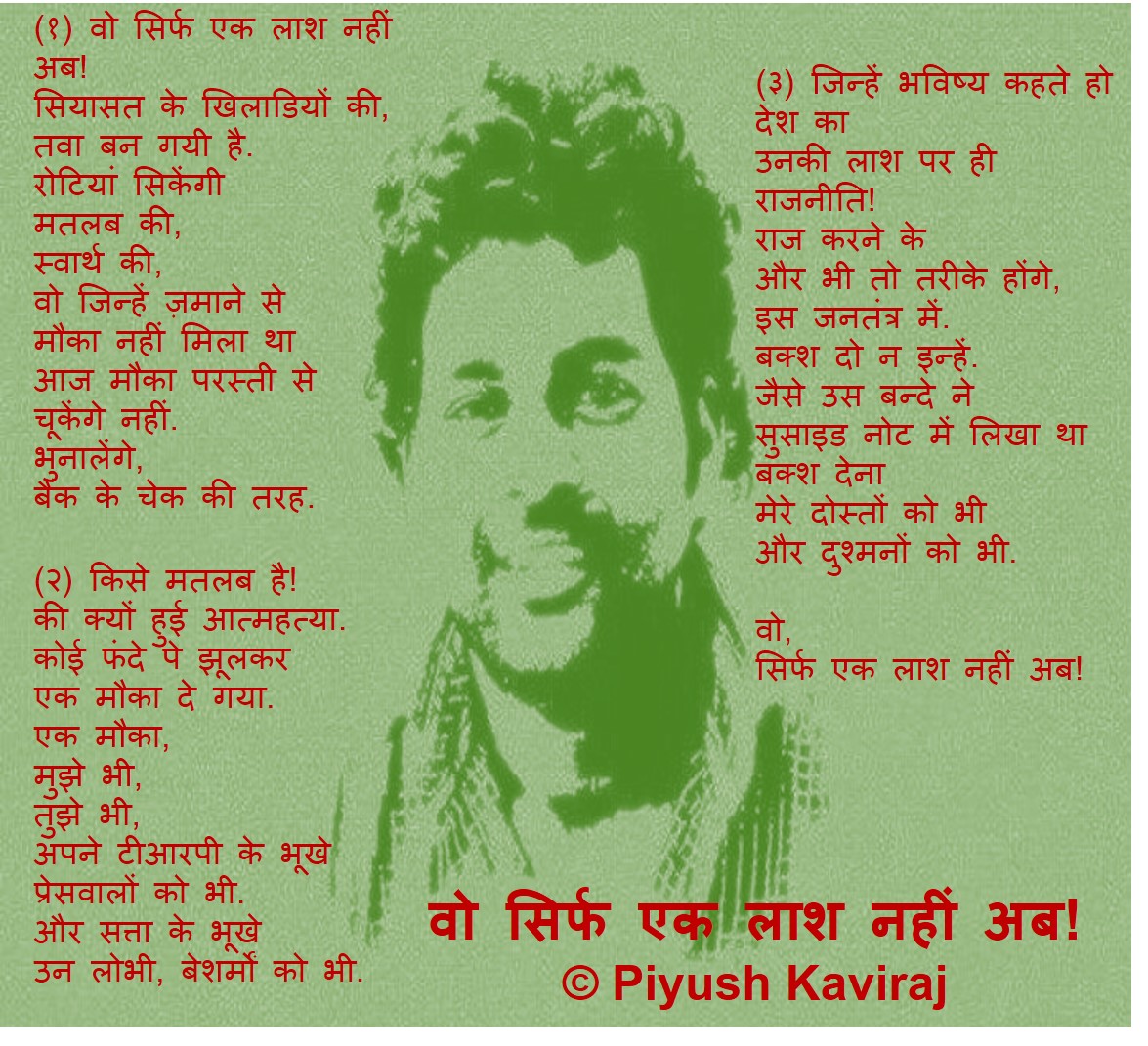
वो सिर्फ एक लाश नहीं अब (poem for Rohith Vemula)

2 Comments


वो सिर्फ एक लाश नहीं अब .. पीयूष कविराज.jpg


2 Comments

Indian Premier League: 5 reasons why it is right to call it India ka Tyohar!


It is beyond any doubt that Indian Premier League- the self proclaimed ‘India ka Tyohaar’ (Festival of India) is a success story. It is a money minting tool for the organizers and participating players; at the same time, it is a dose of adrenaline and excitement to the viewers and fans. Though, marred by various controversies, from match-fixing to public brawls, somehow, IPL resurfaces every year with the same fanfare. Let us leave aside the negative aspects for today and focus on the positives it has brought.

IPL 1

Short-cut to glory

IPL has been a boon to less known or unknown players from different regions. One brilliant knock and a player erupts on the glorious side of fame. Sarfaraz Khan, a 17 year old teenager, hogged the limelight with a single innings of 21-ball 45. It paid off immediately with former England player David Lloyd’s tweet, urging English County teams to rope him in.

38493

Super entertainment in 40 overs

Whether a CEO tired of enduring corporate pressure or a research scholar who has performed failed experiments throughout the day, all need something to cheer them up by dinner time. IPL takes up that perfect slot with 40 overs of non-stop entertainment. So what if rumors of pre-fixed matches prevail. Who cares! Don’t we enjoy scripted movies and plays? Moreover, the sight of cheerleaders dancing on boundaries does cheer up gloomy faces! A tired person just wants some stress buster at the end of the day. IPL succeeds in doing that.

Image: BCCI

No Infidelity issues!

IPL is great for both – fans and general viewers. We all have one or two favorite players in each team. One can enjoy sixes of Chris Gayle in spite of being a supporter of Rajasthan Royals or Chennai Super Kings. This makes IPL unique. And one can always shift sides and start cheering for the winning team. No hard luck involved and always a win-win situation for viewers like me who stays away from fanatics.

Expanse of cricket infrastructure

With the inclusion of more teams, cricket will expand beyond big cities. This will not only provide more opportunity to local lads, but also lead to development of stadium and other infrastructure needed for the expanse of cricket.

Image: BCCL

Progress of other sports

IPL has shown how money minting and sports revolution can be carried out at the same time. The success of IPL is now being emulated in other sports and games. The success of Pro-Kabaddi and Indian Super League (Football) means that the largely neglected players from sports other than cricket can also be rewarded with money and fame. Such forays into more such games will follow soon.

The article was first published at: Indian Premier League: 5 reasons why it is right to call it India ka Tyohar!.

© piyushKAVIRAJ


1 Comment

मैं उर्दू में ग़ज़ल कहता हूं हिंदी मुस्कुराती है- मुनव्वर राना


original source credits: http://www.jankipul.com/2014/12/blog-post_20.html

आज हिंदी के दुःख को उर्दू ने कम कर दिया- कल साहित्य अकादेमी पुरस्कार की घोषणा के बाद किसी मित्र ने कहा. मेरे जैसे हजारों-हजार हिंदी वाले हैं जो मुनव्वर राना को अपने अधिक करीब पाते हैं. हिंदी उर्दू का यही रिश्ता है. हिंदी के अकादेमी पुरस्कार पर फिर चर्चा करेंगे. फिलहाल, मुनव्वर राना की शायरी पर पढ़िए प्रसिद्ध पत्रकार, कवि, लेखक प्रियदर्शन का यह मौजू लेख- प्रभात रंजन

============================

लिपट जाता हूं मां से और मौसी मुस्कुराती है / मैं उर्दू में ग़ज़ल कहता हूं और हिंदी मुस्कुराती है,ये मुनव्वर राना हैं- समकालीन उर्दू गज़ल की वह शख़्सियत जिनका जादू हिंदी पाठकों के सिर चढ़कर बोलता है।  हिंदी में उनकी किताबें छापने वाले वाणी प्रकाशन के अरुण माहेश्वरी बताते हैं कि मुनव्वर राना के संग्रह ‘मां’ की एक लाख से ज्यादा प्रतियां बिक चुकी हैं। यही नहीं, हाल में आई उनकी सात किताबों के संस्करण 15 दिन में ख़त्म हो गए। जिस दौर में हिंदी कविता की किताबें 500 और 700 से ज्यादा नहीं बिकतीं, उस दौर में आख़िर मुनव्वर राना की ग़ज़लों में ऐसा क्या है कि वह हिंदी के पाठकों को इस क़दर दीवाना बना रही है? इस सवाल का जवाब उनकी शायरी से गुज़रते हुए बड़ी आसानी से मिल जाता है। उसमें ज़ुबान की सादगी और कशिश इतनी गहरी है कि लगता ही नहीं कि मुनव्वर राना ग़ज़ल कह रहे हैं- वे बस बात कहते-कहते हमारी-आपकी रगों के भीतर का कोई खोया हुआ सोता छू लेते हैं। उनकी शायरी में देसी मुहावरों का जो ठाठ है, बिल्कुल अलग ढंग से खुलता है। मसलन, बहुत पानी बरसता है तो मिट्टी बैठ जाती है /न रोया कर बहुत रोने से छाती बैठ जाती है।… वो दुश्मन ही सही, आवाज़ दे उसको मोहब्बत से, सलीके से बिठाकर देख, हड़्डी बैठ जाती है।

बरसों पहले हिंदी के मशहूर कवि और ग़ज़लकार दुष्यंत कुमार ने अपनी इतनी ही मशहूर किताब‘साये की धूप’ की भूमिका में लिखा था कि हिंदी और उर्दू जब अपने-अपने सिंहासनों से उतर कर आम आदमी की ज़ुबान में बात करती हैं तो वे हिंदुस्तानी बन जाती हैं। दरअसल राना की ताकत यही है- वे अपनी भाषा के जल से जैसे हिंदुस्तान के आम जन के पांव पखारते हैं। फिर यह सादगी भाषा की ही नहीं, कथ्य की भी है। उनको पढ़ते हुए छूटते नाते-रिश्ते, टूटती बिरादरियां और घर-परिवार याद आते हैं। मां की उपस्थिति उनकी शायरी में बहुत बड़ी है- अभिधा में भी और व्यंजना में भी- जन्म देने वाली मां भी और प्रतीकात्मक मां भी- लबों पे उसके कभी बददुआ नहीं होती / बस एक मां है जो मुझसे ख़फ़ा नहीं होती।

ऐसी मिसालें अनगिनत हैं। लगता है मुनव्वर राना को उद्धृत करते चले जाएं- घर, परिवार, सियासत, दुख-दर्द का बयान इतना सादा, इतना मार्मिक, इतना आत्मीय कि हर ग़ज़ल अपनी ही कहानी लगती है, हर बयान अपना ही बयान लगता है- बुलंदी देर तक किस शख्स के हिस्से में रहती है / बहुत ऊंची इमारत हर घड़ी ख़तरे में रहती है /…. यह ऐसा क़र्ज़ है जो मैं अदा कर ही नहीं सकता / मैं जब तक घर न लौटूं, मेरी मां सजदे में रहती है।../ अमीरी रेशमो किमखाब में नंगी नज़र आई / गरीबी शान से इक टाट के परदे में रहती है।

दरअसल इस सादगी के बीच मुनव्वर एक समाजवादी मुहावरा भी ले आते हैं- राजनीतिक अर्थों में नहीं, मानवीय अर्थों में ही। उनकी ग़ज़लों में गरीबी का अभिमान दिखता है, फ़कीरी की इज़्ज़त दिखती है, ईमान और सादगी के आगे सिजदा दिखता है। हालांकि जब इस मुहावरे को वे सियासत तक ले जाते हैं तो सादाबयानी सपाटबयानी में भी बदल जाती है- मुहब्बत करने वालों में ये झगड़ा डाल देती है / सियासत दोस्ती की जड़ में मट्ठा डाल देती है। 

दरअसल यहां समझ में आता है कि मुनव्वर राना ठेठ सियासी मसलों के शायर नहीं हैं, जब वे इन मसलों को उठाते हैं तो जज़्बाती तकरीरों में उलझे दिखाई पड़ते हैं, मां के धागे से मुल्क के मुहावरे तक पहुंचते हैं और देशभक्ति के खेल में भी कहीं-कहीं फंसते हैं। लेकिन उनका इक़बाल कहीं ज़्यादा बड़ा है। वे सियासी सरहदों के आरपार जाकर इंसानी बेदखली की वह कविता रचते हैं जिसकी गूंज बहुत बड़ी है। भारत छोड़कर पाकिस्तान गए लोगों पर केंद्रित उनकी किताब ‘मुहाजिरनामा’ इस लिहाज से एक अनूठी किताब है। कहने को यह किताब उन बेदखल लोगों पर है जो अपनी जड़ों से कट कर पाकिस्तान गए और वहां से हिंदुस्तान को याद करते हैं, लेकिन असल में इसकी जद में वह पूरी तहजीब चली आती है जो इन दिनों अपने भूगोल और इतिहास दोनों से उखड़ी हुई है। यह पूरी किताब एक ही लय में- एक ही बहर पर- लिखा गया महाकाव्य है जिसमें बिछड़ने की, जड़ों से उखड़ने की कसक अपने बहुत गहरे अर्थों में अभिव्यक्त हुई है। किताब जहां से शुरू होती है, वहां मुनव्वर कहते हैं, ‘मुहाजिर हैं, मगर हम एक दुनिया छोड़ आए हैं / तुम्हारे पास जितना है हम उतना छोड़ आए हैं। आगे कई शेर ऐसे हैं जो दिल को छू लेते हैं, कहानी के ये हिस्सा आज तक सबसे छुपाया है / कि हम मिट्टी की ख़ातिर अपना सोना छोड़ आए हैं…./ जवानी से बुढ़ापे तक जिसे संभाला था मां ने / वो फुंकनी छोड़ आए हैं, वो चिमटा छोड़ आए हैं / किसी की आरजू के पांव में ज़ंजीर डाली थी / किसी की ऊन की तीली में फंदा छोड़ आए हैं। यह पूरी किताब अलग से पढ़ने और लिखे जाने लायक है।

बहरहाल, सादगी कविता का इकलौता मोल नहीं होती। उर्दू के ही सबसे बड़े शायर मिर्ज़ा गालिब कहीं से सादाबयानी के शायर नहीं हैं, उनमें अपनी तरह का विडंबना बोध है- ईमां मुझे रोके हैं, खैंचे है मुझे कुफ़्र’ वाली कशमकश, जो शायरी को अलग ऊंचाई देती है। इक़बाल भी बहुत बड़े शायर हैं- लेकिन उनकी भाषा और उनके विषय में अपनी तरह की जटिलता है। बेशक, मीर और फ़िराक देशज ठाठ के शायर हैं, लेकिन उनकी शायरी मायनी के स्तर पर बहुत तहदार है। लेकिन उर्दू में सादगी की एक बड़ी परंपरा रही है जो कई समकालीन शायरों तक दिखती है। फ़ैज़ की ज़्यादातर ग़ज़लें बड़ी सादा जुबान में कही गई हैं। निदा फ़ाज़ली, अहमद फ़राज़, बशीर बद्र अपने ढंग से सादाज़ुबान शायर हैं और बेहद लोकप्रिय भी। लेकिन मुनव्वर राना इस सादगी को कुछ और साधते हैं। उनकी परंपरा कुछ हद तक नासिर काज़मी की ‘पहली बारिश’ से जुड़ती दिखती है। लेकिन नासिर की फिक्रें और भी हैं, उनके फन दूसरी तरह के भी हैं। एक स्तर पर मुनव्वर अदम गोंडवी के भी क़रीब दिखते हैं, ख़ासकर जब वो राजनीतिक शायरी कर रहे होते हैं। लेकिन अदम में जो तीखापन है, उसको कहीं-कहीं छूते हुए भी मुनव्वर उससे अलग, उससे बाहर हो जाते हैं।

उर्दू की इस परंपरा को पढ़ते हुए मुझे हिंदी के वे कई कवि याद आते हैं जो अपने शिल्प में कहीं ज़्यादा चौकस, अपने कथ्य में कहीं ज़्यादा गहन और अपनी दृष्टि में कहीं ज़्यादा वैश्विक हैं। लेकिन पता नहीं क्यों, वे अपने समाज के कवि नहीं हो पाए हैं। अक्सर यह सवाल मेरे भीतर सिर उठाता है कि क्या यह कहीं शिल्प की सीमा है जो हिंदी कवि को उसके पाठक से दूर करती है?आखिर इसी भाषा में रचते हुए नागार्जुन जनकवि होते हैं, भवानी प्रसाद मिश्र दूर-दूर तक सुने जाते हैं, दुष्यंत भरपूर उद्धृत किए जाते हैं और हरिवंश राय बच्चन और रामधारी सिंह दिनकर तक खूब पढ़े जाते हैं। अचानक ये सारे उदाहरण छंदोबद्ध कविता के पक्ष में जाते दिखते हैं, लेकिन मेरी मुराद यह नहीं है। मेरा कहना बस इतना है कि हिंदी कविता को अपना एक मुहावरा बनाना होगा जो उसके पाठकों तक उसे ले जाए। ये एक बड़ी चुनौती है कि हिंदी कविता की अपनी उत्कृष्टता और बहुपरतीयता को बचाए रखते हुए यह काम कैसे किया जाए।

Source: http://www.jankipul.com/2014/12/blog-post_20.html

jankipul


1 Comment

A safer place for women- How?


With reference to several articles on the recent ‘Uber’ incidence, don’t we think we have reached a stage where we just debate the consequences without doing some groundwork to prevent the unfortunate happenings. If our society is so dominated by male-chauvinism, with our full realisation, did we ever take any step to make it moderate and civilized!

Unfortunately, NO. Its not that we are suddenly realizing these evils. They were always there. It has been in recent decades that the media takes upon these topics and has been successful in creating some awareness. Woman commission has always been there, schools, teachers parents clergy, priests, bollywood and all the proponents of good and correct path were always there. Why didn’t then we teach our children the true values. One may argue that moral education classes in schools is a waste of time. How can it be if taken through correct discourse? Moral education as curriculum and inculcating moral values are two different things.
As we teach our children not to steal money or rob people of their belongings but help the blind cross the road, we have to teach them to respect women and their body and to understand that a woman’s no means NO. Here we have a general notion that there is a yes even in a girl’s no (Remember, Ladki ki naa me bhi haan hoti hai?). I myself have joked over this many times and i do feel sorry about this. We have to teach our children from an early age that women are not objects/commodities on which betting and ownership can be claimed. Parents, being the first teachers have to take up this responsibility so that the next generation is more civilized and learns to respect women.Jpeg
Charity begins at home. Let’s prevent future embarrassments by investing in today’s children. Empowerment won’t come through media debates but by doing our homeworks!
© 2014 Piyush Kaviraj


Leave a comment

From what to how!!


A new perspective to Story of the Tortoise!! Do read.. Don’t teach what to do and what to ask. Teach how to do and how to ask. Empower people, don’t spoon-feed them!
-Piyush

kislaychandan's avatartalesbyCHANG

Newton, Einstein, Edison, Graham Bell, Hooks, etc . Well, most of the famous names which we keep hearing are not Indian.

Every new technology, new successful ideas, new theories- all come from some other country.

We have the richest resources, the best brains, and a competitive manpower but still, we trust imported things and prefer them to the Indian products.

Why ???

Any answer???

 As you all know, when we were children, we came across the story about a rabbit and a tortoise in which tortoise won the race even though it was slow.

Ok that’s nice.

Now if I ask what is the moral of story then I am sure each one of us will say that “slow and steady wins the race”.

Really great, amazing.   Why did it happen that everyone learnt the same moral???

You know why?

Because we were taught so.

For me moral…

View original post 260 more words


Leave a comment

The importance of differences in opinion in the evolution of thought


differences in opinion are to ideological evolution what mutation is to genetics! Nicely put forth.. “Just as mutation is necessary for biological evolution, this difference in perception and interpretation is necessary for ideological evolution”.

Reblogged from: http://triformedlamb.wordpress.com/