piyush kaviraj

feelings and musings…


Leave a comment

Access to Understanding: science-writing competition


Excerpts from webpage:

“The Access to Understanding science-writing competition is for PhD students and early career post-doctoral researchers who have an interest in promoting understanding of biomedical research.

Join a generation of biomedical researchers who recognise the importance of opening up the results of research, so that they are truly accessible to everyone.

A scientific journal article may be the established way to describe your science to other researchers, but is this the best way to explain scientific findings to an interested public?

Widespread availability of research articles doesn’t always mean that they are easily understood. For many who would like to look at the very latest research findings, the style and jargon of research articles puts that information out of reach. One step in bridging the gap between providing access and enabling understanding would be to provide a plain English summary with every research article published. This is the inspiration for Access to Understanding.

The competition is brought to you by the British Library, eLife and Europe PMC as part of the Access to Understandingcollaboration.

Using no more than 800 words, we want you to choose one article from the list provided and explain the research and why it matters to a general reader.

The winning entry will be published by eLife.

The winner will also receive an iPad. Prizes will also be awarded for 2ndplace (an iPad mini), 3rd place (£100 Amazon voucher), and for the People’s Choice Award (surprise gift) identified by public vote, and at the judges’ discretion, entries may also be published by eLife.

Prizes will be presented at a prestigious awards ceremony at The British Library in London on 27 March 2015. All entrants will be invited to the awards ceremony”.

download

Entry criteria

  • The competition opens on 11 November 2014.
  • The deadline for entries is 16:00 GMT 9 December 2014. Please note that there may be numerous people submitting entries as the deadline approaches. Try not to leave submitting your entry until the last hour or so before the competition closes; we cannot accept responsibility for entries that do not reach us in time.
  • Shortlisted entrants will be informed no later than 9 March 2015.

For more details: http://europepmc.org/ScienceWritingCompetition?0

So Get Set Go!!

Note: This article has been mentioned for general information purpose only.

Tweet @ piyushKAVIRAJ


Leave a comment

Poetics of a nation: remembering Nehru – An article from The Hindu


Shiva Vishwanathan presents a nice introspection of Nehruvian era. Jawaharlal Nehru cannot be seen merely as an object of history, a fragment of policy. He was a dream, a hope, a claim to innocence, an aesthetic, which gave to modernity a touch of elegance. Link to the article- http://www.thehindu.com/opinion/lead/opinion-on-jawaharlal-nehru-125th-birth-anniversary/article6600161.ece?homepage=true
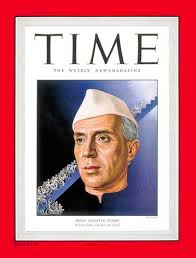
images jln2

This week, India will celebrate the 125th birth anniversary of Jawaharlal Nehru. I must confess that I hate anniversaries when they turn out to be rote affairs, when memory, which hurts like frostbite, is presented painlessly. I hate this era that measures Nehru with calipers and titrates his foreign policy. It is a dull world today when memory turns inane and history seems empty. Life must indeed be meaningless when almost two decades of the Nehru era produce less meaning than five months of a Modi regime. When memories fade, icons die, and when an icon dies, something dies in all of us.

Nehru cannot be seen merely as an object of history, a fragment of policy. He was a dream, a hope, a claim to innocence, an aesthetic which gave to modernity a touch of elegance. I think that is why Gandhi opted for him. The practical Gandhi realised that one needed the impractical Nehru to survive the first decade of Independence. It is only the impractical who survive, who understand desire, hope and dream. Words like development and planning are dull words borrowed from a dismal social science. Nehru gave them a touch of poetry and it is only the poetics of the first decade that allowed us to retain hope and dream differently.

Harnessing science

Imagine a country which suffers two genocides, the Bengal Famine and Partition. Imagine a nation littered with refugees and the bittersweet memories of displacement. Such a nation could have turned melancholic, bitter, even tyrannical. Yet with all the violence, India of the Nehruvian years had a touch of innocence. Indians felt they had done the impossible (win freedom) and now wanted to repeat it. It was Nehru who gave India that lightness of being, that childlike innocence and yet that sophistication that came with a civilisational confidence.

Nehru inspired a generation to hope and believe. In fact, it was the first decades of Independence that could be called the Indian century because Nehru made India feel that Indians were special.

We used science as an enzyme of hope, an elixir of development. Where else could a nation talk of the future as belonging to science or those who make friends with science? The concentration camps were still a stark fact and the atomic bomb had been tested over Japan.

No other nation saw science as a dream. The Russians and the West saw it as a tool of economic development. Nehru insisted science was culture, a form of playfulness, providing a sense of discovery and excitement. This was a man who felt that science would prolong his discovery of India and even the world. For Nehru, science was not about productivity. It was a way of looking at the world. In fact, if one looks at Nehruvian scientists one senses that same elegance about science, whether it was P.C. Mahalanobis, Homi J. Bhabha, K.S. Krishnan, Vikram Sarabhai or Satish Dhawan. For all of them, science was not just knowledge. It was an aesthetic for approaching the world, an insight we have lost in this dismal age of the information revolution.

One is reminded of a story about the Russian scientist, Nikolai Vavilov, who spent his student days with William Bateson at Cambridge. Vavilov was once referring to an English colleague, a nuts and bolts empiricist. Vavilov claimed that he was a good worker but insisted in his accented English that he had no-“Phi-Lo-so-phee.” Nehru provided philosophy to the first years of Independence.

I admit it had a touch of innocence. In fact, it was re-echoed in Hindi cinema by Raj Kapoor, who, like Nehru, was an incurable romantic, who saw in being Indian and nationality, a dream of a different being. When Kapoor sang “Mera¯ ju¯ta¯ hai Ja¯pani¯, ye patlu¯n Inglista¯ni¯, Sar pe la¯l topi¯ Ru¯si¯, phir bhi¯ dil hai Hindusta¯ni¯,” he was reciting one of the new anthems of the Nation, a country, a generation which believed it had a tryst with destiny.

Ideology and elegance

Even ideology had a touch of romance. Today one laughs at socialism and the dreams of the Left when one watches the dreary rhetoric of the CPI(M). But ideology in that era was an aesthetic of justice, a poetics of solidarity with people. I know the words might sound empty today but when the Indian People’s Theatre Association performed, or Nehru spoke ideology, Marxist-Socialist ideology made sense of the world. As an old Marxist explained, in India, Marxism was not just about class. It gave a touch of class to the way we thought of the world. One misses that elegance, that aesthetic of democracy when we talk of secularism today as it gets viscous with political correctness.

One must remember that the first decade was an idealistic decade. When I think of my parents or their friends, one senses the deep celebration of India. Every Indian felt his sacrifice was worth it. It was a moral, aesthetic and scientific world where character-building, nation-building and dam-building went together. There was little cynicism, a great realism about poverty and yet a hope that nation-building Nehruvian style was one of the great epics of the century. India has lost that epic quality of hope and innocence.

May be the Nehruvian era needed that touch of pragmatism we call Patel. May be Nehru could have absorbed the insights of Rajaji. At that time we had such a surplus of leaders, from Maulana Abul Kalam Azad, Rajendra Prasad, B.C. Roy and Rajaji that we did not realise that the first decade was a festival of leadership, with each individual adding to the richness of the Indian vision.

“India could not have been India without harvesting the achievement of the Nehruvian years.”

I remember when the Nehruvian era died. For me, as a child it was a composite of two events. India, invincible India, the India that gave us Dhyan Chand, lost in hockey at the Rome Olympics. For my biased mind, cricket, tedious cricket, only emerged into the limelight after that. Then, even more poignantly, India lost a border war with China. It was a collapse of a world view where India which had conquered colonialism was mired once again in defeat. Nehru, our immaculate Nehru, sounded old and vulnerable. There was a loneliness, a tiredness about him. When a legend is threatened, mediocre critics like termites creep out of the woodwork of history to recite his mistakes. The magic was gone and Nehru faded soon afterward. The question “after Nehru who?” popped up soon and one then senses the momentous nature of the loss. One realised that for all the mistakes, those were the last magical years of the nation.

Institution building

Today, given the mediocrity of his epigone and the autism of the Congress party, we forget that the Nehruvian era was the great period of institution building, where we initiated community development, celebrated planning, built our great IITs, revitalised our science laboratories. India could not have been India without harvesting the achievement of the Nehruvian years.

I remember my old friend and teacher U.R. Ananthamurthy. Before he died, he left behind a great manuscript, a testament, a manifesto. URA criticised the Nehruvian years but he made a more critical point. Nehru might have made mistakes but Narendra Modi is the mistake that India might regret one day in its angry backlash against the family. Nehru was a classic. Our current regime is a footnote. It can only become history if it destroys the Nehruvian years.

Today, there is an epidemic of seminars, conferences and newspaper articles about 125 years of Nehru. Writers will give Nehru the good conduct certificates he does not need and praise his concern for poverty and his interest in science. The Congress is petty enough not to invite Mr. Modi but pompously invites guests from overseas. It is an un-Nehruvian act in its aesthetics and one must condemn it. Yet, what will be even more depressing is the social science litany about a man who gave us the poetics of a nation. In our current politics, it is not memory and its poignancy we are evoking. Our anniversaries become dull timetables, empty acts of repetition. When the magic is gone, only an official catechism remains. It is simpler to open a book of photographs and travel down memory lane. I wish there was something simpler, more abstract, a simple poem that caught the magic of the man without shrinking it to nostalgia, because Nehru, our Nehru deserved much more.

(Shiv Visvanathan is a professor at Jindal School of Government and Public Policy.)
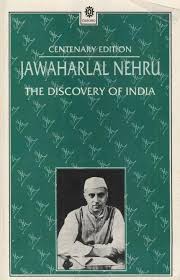
images jln

The article can be found at:  http://www.thehindu.com/opinion/lead/opinion-on-jawaharlal-nehru-125th-birth-anniversary/article6600161.ece?homepage=true

Leave a comment

From what to how!!


A new perspective to Story of the Tortoise!! Do read.. Don’t teach what to do and what to ask. Teach how to do and how to ask. Empower people, don’t spoon-feed them!
-Piyush

kislaychandan's avatartalesbyCHANG

Newton, Einstein, Edison, Graham Bell, Hooks, etc . Well, most of the famous names which we keep hearing are not Indian.

Every new technology, new successful ideas, new theories- all come from some other country.

We have the richest resources, the best brains, and a competitive manpower but still, we trust imported things and prefer them to the Indian products.

Why ???

Any answer???

 As you all know, when we were children, we came across the story about a rabbit and a tortoise in which tortoise won the race even though it was slow.

Ok that’s nice.

Now if I ask what is the moral of story then I am sure each one of us will say that “slow and steady wins the race”.

Really great, amazing.   Why did it happen that everyone learnt the same moral???

You know why?

Because we were taught so.

For me moral…

View original post 260 more words


Leave a comment

एक दिवाली ऐसी भी…


Beautifully written poem.. one can feel the divide created by means and money and the urge to bridge that divide after reading this poem. Good Job @AditiSahu7

Aditi's avatarAditi Sahu

Kar  dein roshan! Kar dein roshan!

एक दिवाली ऐसी भी…

मचल रही दिलों में सबके ख़ुशी की एक अजब लहर,
जगमगा उठा हर रास्ता, बूढ़े-बच्चे हुए रोशन चेहरे सभी
इसी सब के दौरान कुछ घरों में मचा है भूख का कहर,
दिवाली हो या ईद, दो-वक़्त की भी रोटी कहाँ नसीब होती कभी!

एक दिवाली ऐसी भी, एक दिवाली वैसी भी!

वो दिवाली के दिन नए-नवेले कपडे फबते कुछ बच्चों पर,
रोज़ पांच दिन तक पूजा, छुट्टी और नविन कपडे मनभाते बच्चों को ..
वहीँ बाज़ार में बेचते दिखी एक नन्ही बच्ची फलों से भरी टोकरी रख पर सर,
एक लाचार माँ मांगती दिखी भीक्षा, पास दिखे नग्न अवस्था में बच्चे दो!

एक दिवाली ऐसी भी, एक दिवाली वैसी भी!

वो हर घर रौशनी- दिये, आकाशदीप और सीरीज की चमकार,
लगे घर में रिश्तेदार, पड़ोसी और दोस्तों की कतार,
पर अभी भी कुछ कुलों में घुप्प अंधकार, कर पाएं आँगन रोशन
एक ही…

View original post 109 more words


Leave a comment

Aao parosen kuch lamhe is khwabon ki tshtari me


आओ परोसें कुछ लम्हे, इस ख्वाबों की तश्तरी में!!

tikulicious's avatarSpinning a Yarn Of Life

आज बड़े दिनों बाद ज़िन्दगी तुम मिली हो मुझसे
आओ करें कुछ गुफ्तगू
दोपहर की नरम धुप में बैठकर
बुने कुछ गलीचे रंगों से सराबोर
आओ परोसें कुछ लम्हे इस ख्वाबों की तश्तरी में
आओ आईने से झांकते अपने ही अक्स में
ढूंढें खुदको या फिर युहीं ख्वाहिशों की
सिलवटों में एक दूसरे को करें महसूस
या फिर याद करें उन भीगी रातों में
जुगनुओं का झिलमिलाना
आओ खोलें खिड़कियां मंन की
हों रूबरू खुदसे
पिरोएँ ख्वाहिशें गजरों में
भरें पींग, छूएं अम्बर को
आओ पूरे करें कुछ अधूरे गीत
छेड़ें कुछ नए तराने
आओ बिताएं कुछ पल साथ
देखें सूरज को पिघलते हुए
इस सुरमयी शाम के साये तले
आओ चुने स्याही में लिपटे सितारे
बनायें इस रात को एक नज़्म
आओ परोसें कुछ लम्हे इस ख्वाबों की तश्तरी में

View original post


Leave a comment

Follow Up: Munshi Premchand


Munshi Premchand… the wizard and gem among novelists!!

Urduwallahs's avatarurduwallahs

Every child in India has read at least one short story by Premchand, either in school or in university. At our mehfil at Prithvi we decided to honour the legacy of Premchand through his rich literature.

His oeuvre consists of over 250 short stories, dozens of novels, essays and translations of various foreign literary works into Hindi/Urdu. To explore Premchand’s life and works we invited many people associated with his work. The list of people included Nadira Babar (Apa) and her team Ekjute, Mujeeb Saab who has dedicated his life to Premchand’s stories and has done several plays based on his work, Iqbal Niyazi Saab and Javed Siddiqui Saab.

The evening started with an introduction of Premchand given by Javed Saab. He spoke about the humility of a man whose work spans far and wide. He mentioned that Premchand’s work has a strong flavor of a section of society, which…

View original post 265 more words


Leave a comment

THE SON OF AN UNTUTORED PHILOSOPHER – AN EXCERPT FROM ‘IQBAL’ BY ZAFAR ANJUM


an excerpt from ‘Iqbal’ by Zafar Anjum: http://bit.ly/1xwmLht


Leave a comment

The importance of differences in opinion in the evolution of thought


differences in opinion are to ideological evolution what mutation is to genetics! Nicely put forth.. “Just as mutation is necessary for biological evolution, this difference in perception and interpretation is necessary for ideological evolution”.

Reblogged from: http://triformedlamb.wordpress.com/


Leave a comment

A Scotland on Kashmir? – “article from The Hindu”


A Scotland on Kashmir? – The Hindu.

Many thousands of Kashmiris who live in Scotland could vote in the Scottish referendum, but they have little say in their own State

In last week’s referendum, the campaign for Kashmir’s status took a surprising turn when citizens of the State voted overwhelmingly to stay with India. With a 90 per cent turnout in virtually all districts of Jammu and Kashmir, the vote made it abundantly clear that separatist forces, fuelled by neighbouring Pakistan, had been convincingly defeated. Yasin Malik, who had supported the idea of an independent homeland for the Kashmiris, immediately asked for a recount; the vote however clearly stated that the majority of the local population wished to remain with India. Prime Minister Narendra Modi who had endorsed the referendum is expected to appear on national television to outline constitutional reforms, giving greater autonomy to Kashmir within the Indian union…

Sixty seven years after independence, the Indian state still struggles with such archaic ideas of nationalism; it is hard to imagine that the recent referendum for Scottish independence could ever see a similar call to some sort of partial self-rule in Kashmir.

But the comparison with Scotland is perhaps unfair, for Scotland has been part of a 300-year-old union, and its attempted withdrawal was triggered largely by issues of domestic governance. Kashmir on the other hand poses more complex issues of religious, ethnic and national identity. Without the participation of thousands of Hindu and Sikh refugees, obviously no referendum on Kashmir can be fair. Moreover, unlike Scotland, Kashmir’s status as disputed territory multiplies choices, not just for independence, but whether to align with a neighbour, and if so, which neighbour.

Symbols

Separatist movements in other parts of the world have only marginally succeeded in creating autonomy, certainly not complete freedom. In the 1980 and 1995 referendum, Quebec rejected independence and chose to stay with Canada. The Flemish have campaigned long enough for a territory of their own in divided Belgium. Even separatists in Spain have been inspired by the Scottish vote; Royo-Marine, a Catalonian leader, insisting that “nothing can stop the will of people.” Doubtless Kashmiri separatists also watched the Scottish referendum closely.

At the heart of the problem lies the Indian practice of nationalism, often confused with private patriotism. The country’s status as an old civilisation and a young nation contributes to such collective insecurity and anxiety. It becomes essential to parade around all the symbol of togetherness at public functions — the national anthem, the tricolour, the Ashok Chakra, and an endless array of cultural diehard longings that make patriotic statements to others: Republic Day and Independence Day celebrations, the ‘India Day Parade’ in New York, Ram-Leela in London. The country’s touchy patriotism is also singed easily by petty cricketing loyalties. Even if long-settled Indians in England root for the Indian team, the occasional Kashmiri chant for Pakistan is a slur hard to bear. God forbid an Indian athlete accidentally holds the flag upside down, or drapes it like a lungi, or forgets to mouth the words of the anthem. To a nation unsure of its identity, these are grave, unpardonable insults.

For the most part, the rest of the world treats its national symbols with less reverence and with the banter of easy familiarity, not to be taken too seriously. The American national anthem is sometimes played as a pornographic medley on radio; ‘Stars and Stripes’ is available as underwear, socks, and bandannas. The Brazilian flag was recently converted to a football and kicked around.

Referendums on independence and flags as underwear are of course for self-assured nations that value human choice and dignity over a vague and — now in the 21st century — waning patriotism.

Liberties that matter

Who is Indian, what he eats, who he worships, what company he keeps, in which country he lives, all have little relevance in a world that no longer respects borders. Certainly at the time of independence, when the Kashmir problem was framed, nationalism was a natural sentiment, triggered as it was by anti-colonialism. At the time, it was the binding glue necessary for a country discovering its new identity. That time is long past. But as a people, perhaps, we have not progressed beyond the assertion of symbolic identity — not far enough to see that individual and private liberties may matter more. And that people in Kashmir, or the North East, or Tamil Nadu, might have real reasons to ask for certain freedoms — choices they should be allowed, in the very least, to state.

It is ironic that many thousands of Kashmiris who live in Scotland could vote in the Scottish referendum, but have little say in their own State. Obviously, a settled long-term political peace is a necessary condition for any referendum. Under the present cloud of acrimonious rhetoric, a Bilawal Bhutto screaming hoarse about Kashmiri possession, and a State reeling under a natural calamity, the Indian stance needs to be balanced by cautious wisdom. Sadly, whenever ideas of partial autonomy and greater self-rule are raised, the government puts up institutional smokescreens, and claims allegiance to archaic and oft-repeated measures and processes. A nervous nationalism quickly comes to the fore with the persistent refrain about India’s integrity, United Nations resolutions and at what level to talk with Pakistan. When the only solution sought is perpetual stalemate, the problem will never go away.

(Gautam Bhatia is a Delhi-based architect and writer.)